Why Do Some Women Look 35 at 55?
The Biological Beauty Revolution Changing How We Understand Skin Aging.
Who has experienced this moment?
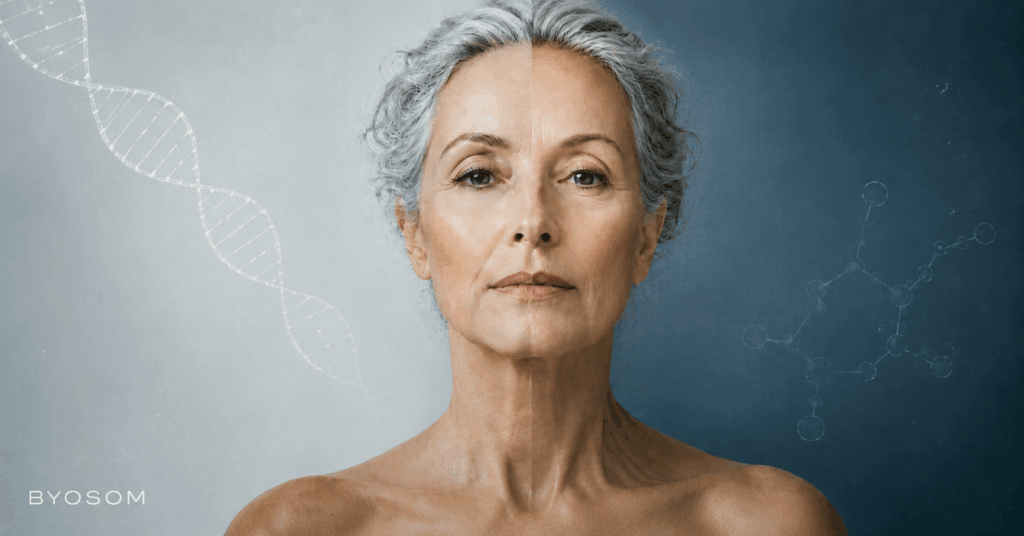
You meet someone your age. Maybe a colleague, a friend, or even someone you haven’t seen for years. The two of you were born in the same decade, grew up in similar environments, and perhaps even share similar lifestyles. Yet somehow, her skin tells a completely different story. She looks younger. Fresher. More resilient. Not because she doesn’t have wrinkles. And not because she’s discovered a miracle cream. It may be because you have different genetic profiles.
For decades, the beauty industry has tried to explain this phenomenon through lifestyle advice, trending ingredients, cosmetic procedures, or the vague idea of “good genes.”
While all of these factors may play a role, modern science is revealing something far more fascinating: aging is not a single process, and skin does not age equally in every person.
The truth is that beneath the surface, we all have a unique biological system. Some people naturally produce collagen more efficiently. Others are better protected against oxidative stress. Some skin types lose hydration faster, while others maintain stronger barrier function for decades. Some people are more vulnerable to inflammation, pigmentation, or environmental damage.
In other words, two people can use the exact same skincare routine for years and still experience completely different outcomes and that realization may become one of the biggest beauty discoveries of this generation.
The Hidden Problem With Generic Skincare
The beauty industry has become extraordinarily sophisticated at creating products. Every year, thousands of new creams, serums, masks, peptides, antioxidants, acids, vitamins, and active ingredients are introduced to the market. We’ve never had more choices. Yet despite this abundance, millions continue to experience the same frustration. We buy products that promise visible results. Invest in premium brands. Follow expert advice. Use trending ingredients. And still, many of us still don’t understand our skin.
Why?
Because most skincare products are designed for categories rather than individuals.
Dry skin, sensitive skin, combination skin, mature skin – these categories focus on the surface. However, biology is far more complex. Your skin is not a category. It is a living system influenced by genetics, lifestyle, environment, hormones, inflammation, oxidative stress, UV exposure, hydration processes, and hundreds of biological interactions occurring every day.
For years, the industry has focused on creating better products. Very few companies have asked a different question: What if the problem is not the product? What if the problem is that the product was never designed specifically for you?
These questions became the foundation for BYOSOM.
The Innovation Behind BYOSOM
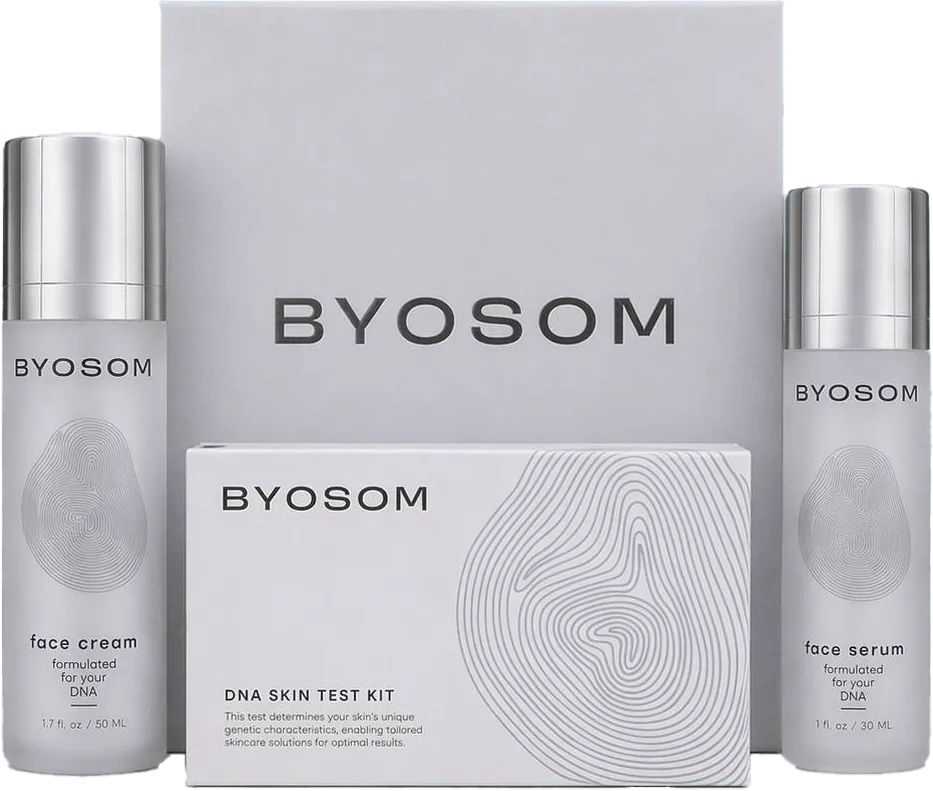
Recognized in 2025 as an innovation project under internationally recognized OECD innovation standards, BYOSOM was created around a simple yet powerful idea: What if skincare could be formulated for the biology of the individual rather than the average consumer? To answer this question, BYOSOM combines several layers of information.
The first layer is genetics.
Scientific research has shown that certain genetic variations may influence processes associated with collagen structure, antioxidant protection, inflammation, pigmentation, hydration, glycation, and skin resilience. BYOSOM analyzes a range of scientifically studied genetic markers connected to these biological functions.
Yes, genetics play a significant role in skin appearance. However, it’s not the only factor involved. BYOSOM GENYQ technology reveals how lifestyle factors and skincare ingredients can influence your skin’s biological age. Using a detailed biological profile, the genetic markers we assess are translated through a sophisticated formulation platform that identifies ingredient combinations tailored to your skin’s unique requirements, helping support healthier, more resilient, and youthful-looking skin.
BYOSOM uses biological insights to reduce guesswork and help create skincare formulations tailored to each individual. This is a fundamentally different approach from most current personalization models, which typically recommend existing products from a predefined catalog.
BYOSOM’s vision is rooted in scientific innovation.
What Changes When We Start Following Biology?
Imagine knowing that your skin is more vulnerable to collagen degradation than the average person. Or that your antioxidant defense systems may require more support. Or that your skin’s hydration pathways function differently. Or that your biological profile suggests a stronger sensitivity to environmental stress. Suddenly, skincare becomes less about trends and more about relevance. Instead of asking:
“What is the best serum on the market?”
You begin asking:
“What is the best serum for me?”
This shift changes everything. You stop chasing viral products. You stop experimenting endlessly with ingredients. You stop spending years testing routines based on trial and error. And you begin to align with how your skin functions.
The benefits of aligning with your biology aren’t only cosmetic. Many women describe a sense of confidence that comes from finally understanding their skin. When skincare becomes personalized, decision-making becomes easier. Consistency improves. Expectations become more realistic. The relationship between science and beauty becomes more meaningful. Healthy skin function is built and supported over time. The earlier you understand your skin, the earlier you can begin supporting the biological processes that help keep it healthier for longer.
BYOSOM is a brand with a mission to help people understand themselves better, turning clarity into one of the greatest luxuries in modern beauty. We cannot stop the aging process. However, by understanding it more intelligently, we can help guide better decisions that support your skin’s longevity.
We are here to help you understand your skin’s unique strengths, vulnerabilities, and biological potential.